Super deals: At least 50% off
Guide
Ski Touring Backpacks
For a day's ski touring you need a pack of 25 to 30 litres with a separate compartment for shovel and probe and a ski carry. For piste touring, 15 to 20 litres is usually enough.
Key points
- Day tour: 25 to 30 litres, piste touring usually 15 to 20.
- Shovel and probe in the safety compartment, transceiver on you.
- An airbag adds to your rescue kit. It never replaces it.
Which pack for which tour?
| Use | Choice | Limit |
|---|---|---|
| Evening laps at the piste edge, training | ChoicePiste touring pack (up to 20 l) | LimitLittle room for spare layers and rescue kit |
| Day tours in open terrain | ChoiceTouring pack (21–30 l) | LimitTight once rope, harness and crampons go in |
| Off-piste descents, short climbs | ChoiceFreeride pack | LimitMostly up to 30 l: too small for hut trips |
| Touring and freeride in open terrain | ChoiceAvalanche airbag pack | LimitA good 1 kg heavier. No substitute for transceiver, shovel and probe |
| Glaciers, multi-day traverses | ChoiceSki mountaineering pack (over 30 l) | LimitToo big for a day tour. Cinch the compression straps when half empty |
Types compared
Piste touring pack (up to 20 l)
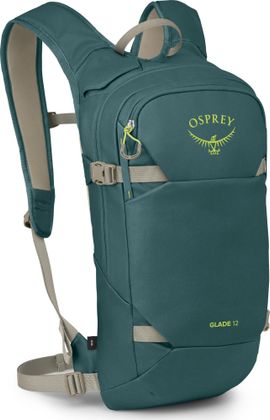
For evening laps at the piste edge and training.
- Advantage: Light and close-fitting
- Drawback: Little room for rescue kit
Touring pack (21–30 L)
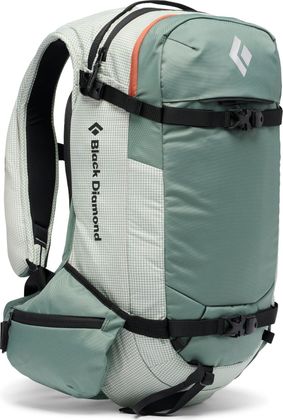
For day tours in open terrain.
- Advantage: Safety compartment
- Drawback: Tight once rope, harness, crampons go in
Avalanche airbag pack (with airbag)
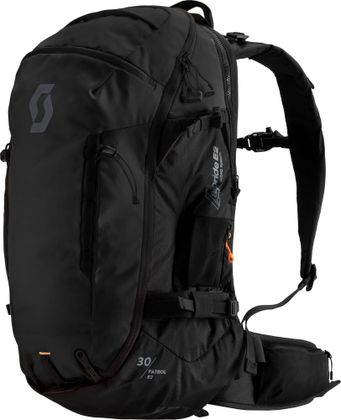
For touring and freeride in open terrain.
- Advantage: Airbag of at least 150 l to EN 16716
- Drawback: A good 1 kg heavier
What to check before you buy
| Question | In short | Why |
|---|---|---|
| How many litres do I need? | In short25–30 l for day tours | WhyManufacturers quote 20 to 30 litres for day tours and 30 to 40 for hut-to-hut traverses. Too small means cramming. Too big tempts you to carry things you will not use. |
| Where do shovel and probe go? | In shortSeparate compartment | WhyIn a separate compartment you can open in one move. The avalanche transceiver is worn on your body, never inside the ski touring backpack. |
| Which back length fits me? | In shortNeck to hip bone | WhyMeasure from the seventh cervical vertebra, the bump at the base of your neck, to the top of your hip bone. Deuter builds SL packs for about 42 cm and regular fit for about 46 cm. |
| How do I carry skis on the pack? | In shortDiagonal or A-frame | WhyDiagonal is quickest. In an A-frame one ski sits on each side with the tips strapped together: stable, and your legs stay free. |
Frequently asked questions
Can I use a hiking rucksack for ski touring?
For piste touring while the lifts are running, yes. In open terrain it lacks the safety compartment for shovel and probe and the ski carry.
Is an avalanche airbag worth it?
In open terrain, yes.
Toploader, frontloader or backloader?
A toploader is packed from the top. A frontloader zips open at the front, a backloader at the back panel, the one side with no skis or axe strapped to it.
Are there ski touring backpacks for women?
Yes. Women's packs have a shorter back and narrower shoulder straps set closer together. Deuter calls them SL. They also suit men with a short back.
Last updated: October 2026
What for?
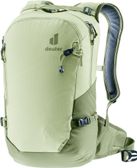
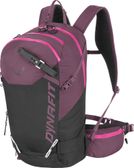
Piste touring
A compact pack can suit short, approved piste tours. Check the fit with a spare top, warm layer and drink inside; additional safety equipment also needs room.
- Check volume with kit
- Secure fit
- Check ski attachment
Ski touring
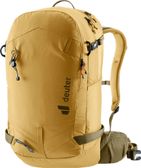
For a day tour choose a ski touring backpack of 25 to 30 litres with a safety compartment for shovel and probe and a ski carry. The transceiver is worn on your body, never in the pack.
- 25–30 litres
- safety compartment
- ski carry
- back length that fits
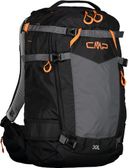
Freeride
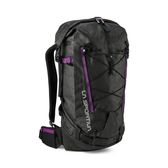
A freeride pack should stay stable and give quick access to shovel and probe. A complete airbag system is an additional option; ordinary packs do not provide that function.
- Secure fit
- Emergency compartment
- Airbag is additional
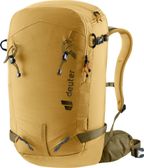
High-alpine
For ski mountaineering you need a ski touring backpack of 35 to 45 litres. Rope, harness and crampons go inside, while ice axe and skis ride on the outside.
- 35–45 litres
- axe and rope holders
- compression straps
- load-bearing hip belt
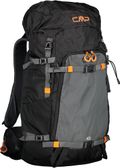
No products match these filters.


M_L
S_M


S/M
L/XL


